
Good Day Mockingbird

Issue № 5 Before the Bell

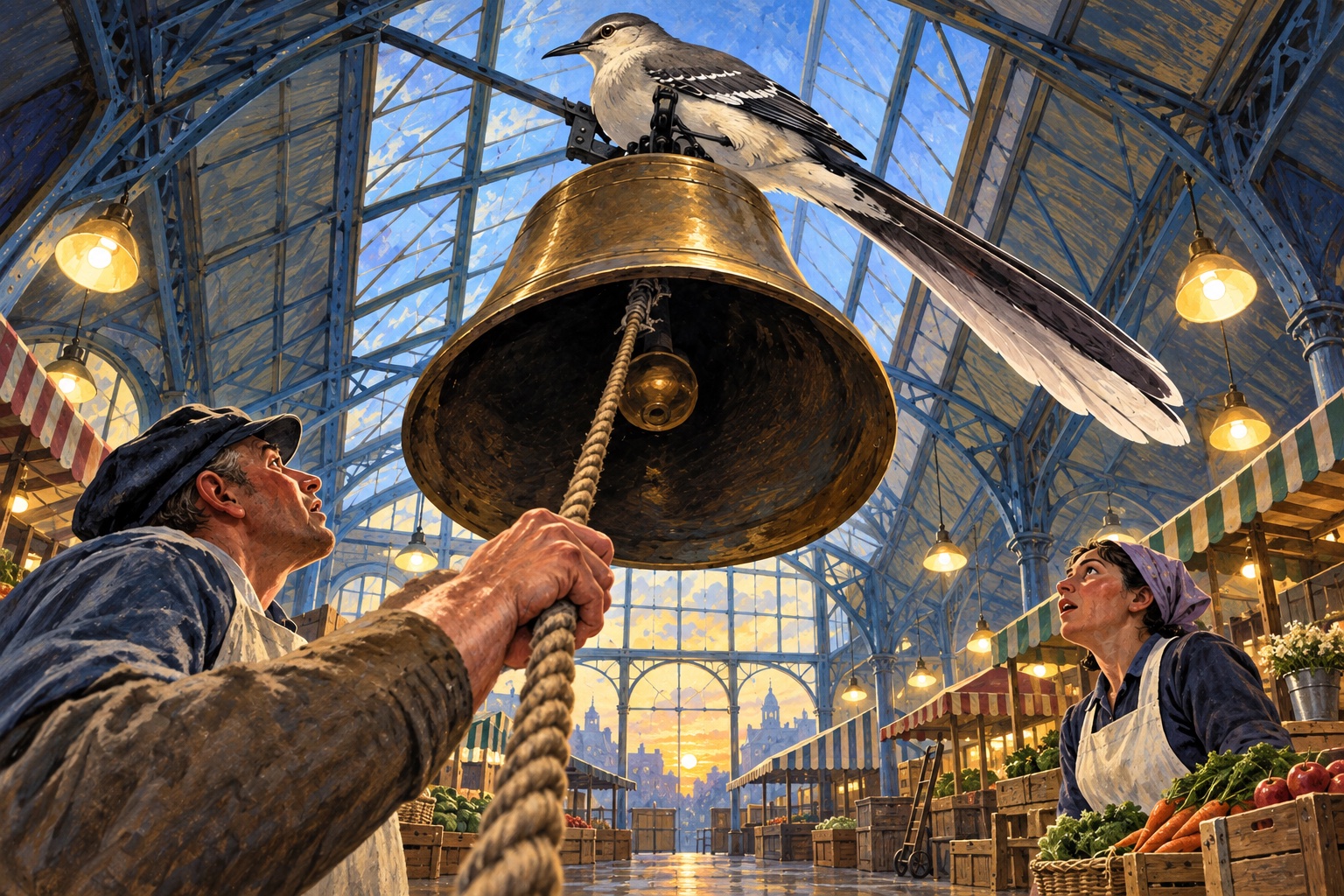
Seen from the floor of a glass-roofed market hall at dawn, a great brass bell hangs from the iron trusses with a giant gray mockingbird perched calmly on its crown; below, a bell-ringer in a flat cap grips the slack rope and stares up, and a market woman in a headscarf looks up from the right, while the lit and empty stalls recede toward a low sun in the end window.

A fish hall whose ice plant dies at ten to three; two tea stalls on the path to a grain market, ten feet and eleven years apart; a Haarlem tavern in the winter of 1636, where a stranger buys a weight of something still in the ground. Come early. The market isn’t the market yet.

From the Editor’s Desk

I got to a farmers market at half past five one morning by accident, having dropped somebody at the airport, and I learned that a market before it opens is not a smaller version of the market. It is a different one. Nobody would sell me anything. The bread woman tore the heel off a loaf and handed it to me and waved my money away, not out of kindness, but because we were not open, and money was not what was in use yet. What was in use was the coffee cart passing cups down the row without asking who wanted one. The flower man setting a bunch of dahlias on the peach table and walking off with a bag of peaches, no words exchanged. A kid being paid in strawberries to hold a tent pole. A great deal changed hands in the next two hours, and nothing was sold.

Continue reading →

In this issue

A black-and-white photograph in an old street under gas lamps: a man in a tweed cap, round glasses and a heavy overcoat holds up two lumps of block ice in gloved hands and looks straight at the camera, a stack of ice behind him.
I

The Sawdust House

The ice plant dies at ten to three on a Friday in June, the fitter can’t come before Monday, and eleven stalls of fish are already on the lorries. Forty blocks under sawdust against a seventy-block morning, and every price in the hall moves before a customer sees one.

Read the story → 9 min

At dawn in an open-air market, two women in printed cloth face each other across two rough wooden tea stalls, kettles steaming on charcoal stoves behind them; one holds out a root of ginger broken in two and the other reaches for it.
II

Two Kettles

Two tea stalls on the path to Marol Market, ten feet apart, and eleven counted years of argument about sugar, ginger, and whose fire the grain men smell first. Achol’s kettle boils first. It always does. Anyone would tell you.

Read the story → 9 min

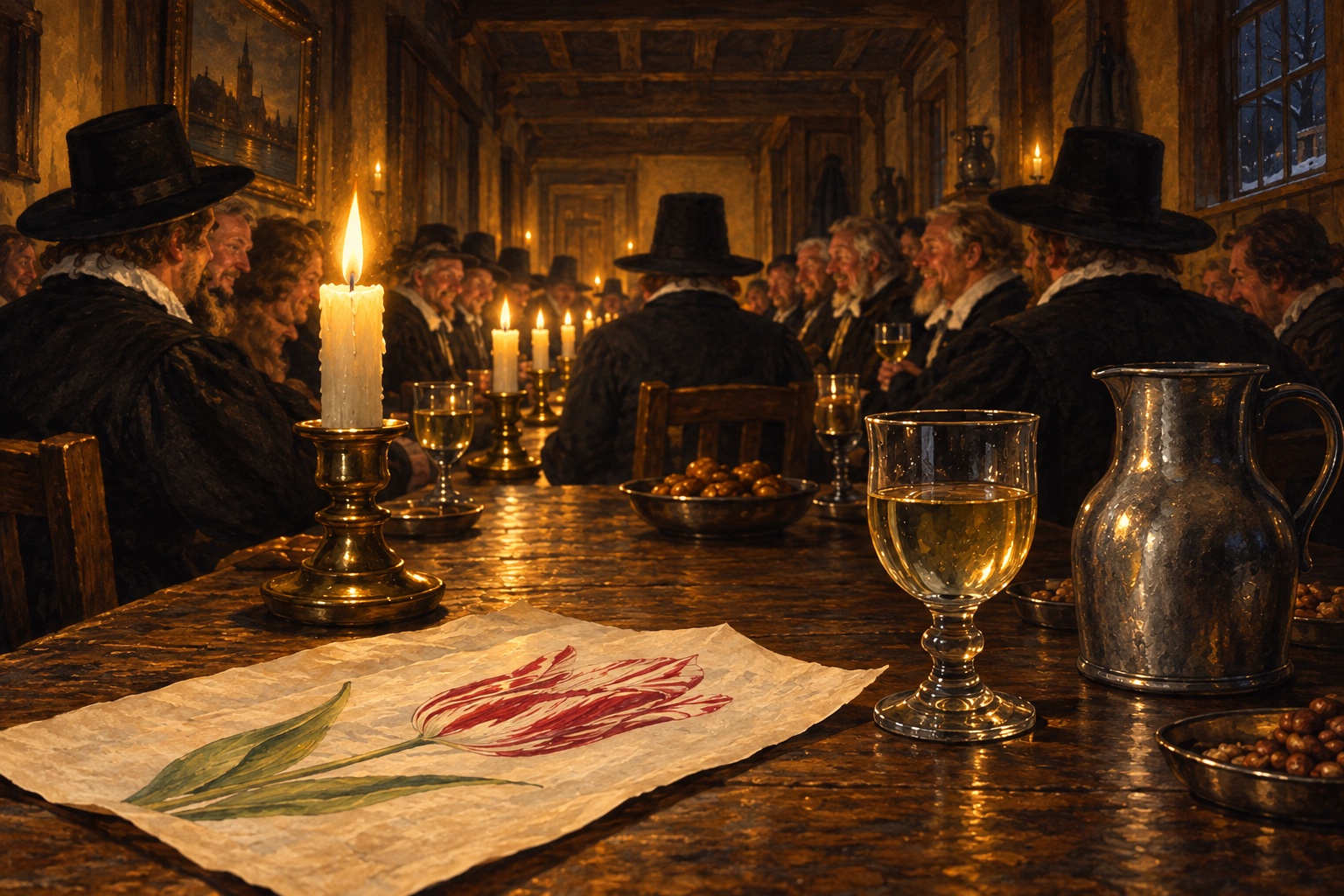
Two in the morning in a candlelit Dutch tavern, a long table crowded with men in black coats, white ruffs and tall hats receding into warm shadow; in the sharp foreground a loose watercolour sheet of a flamed red-and-white tulip lies on the bare wood beside a glass of pale Rhenish wine and a pewter jug.
III

The Wine Money

A tavern in Haarlem, a winter evening in 1636, and a grain man from Hamburg who has been coming eleven weeks and wants to be one of the men who is told things first. A watercolour of a flower nobody can see, twelve hundred grains’ weight of something still in the ground, and the round that seals it.

Read the story → 9 min