Good Day Mockingbird

Issue № 8 The High Season

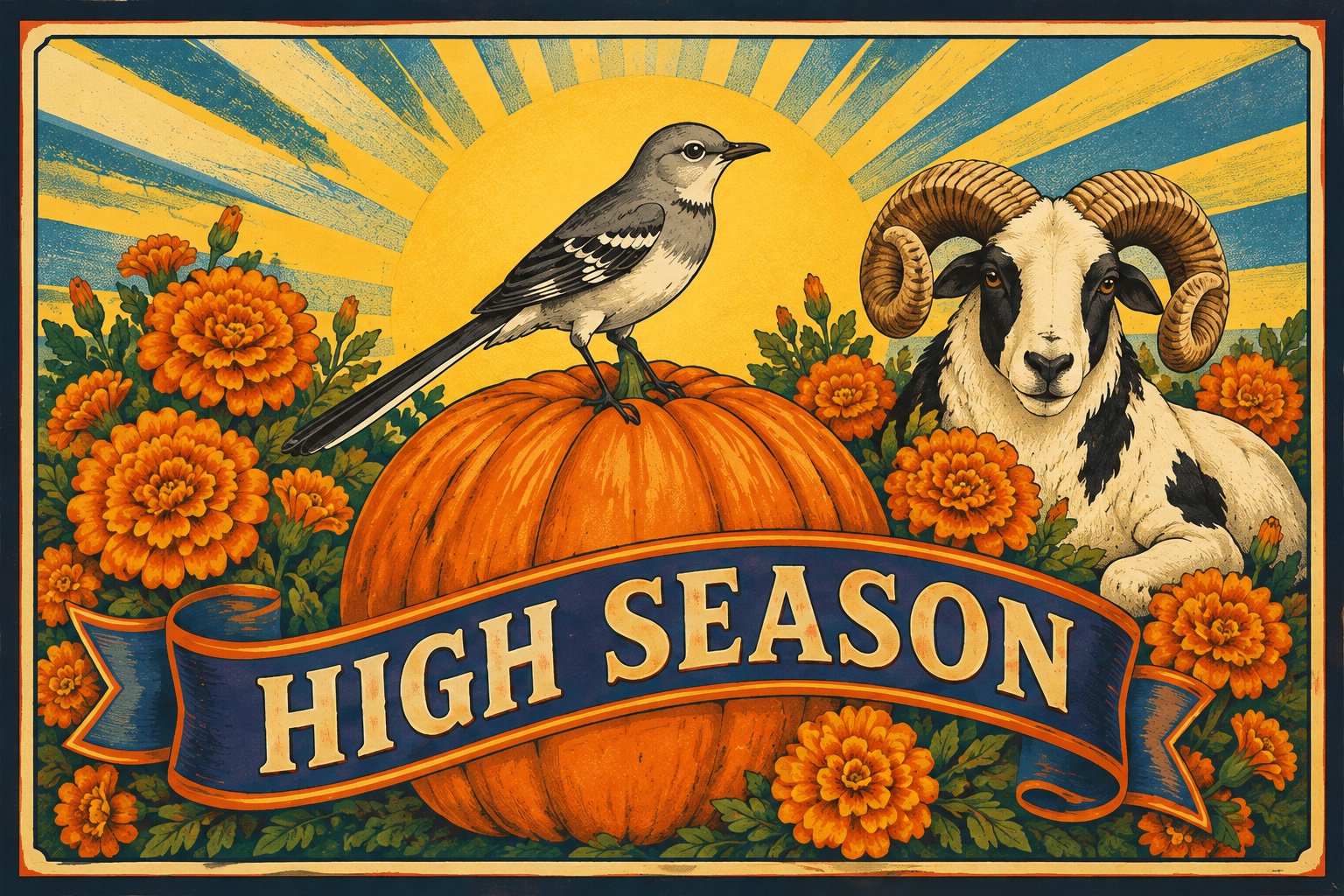
In the style of a 1930s California fruit-crate label, a grey mockingbird perches on a big orange pumpkin in front of a golden sunburst, with clusters of orange marigolds on either side and, at the right, a white ram with black patches and curled horns lying among the flowers and looking out; a navy ribbon across the pumpkin reads HIGH SEASON.

Three markets in the one week that pays for the other fifty-one. In Mexico City, in the last days of October, a marigold family has sold the whole field and a man from a hotel wants the forty stems that were never for sale. On the road into Half Moon Bay, on Pumpkin Festival Saturday 2019, an honor box meets three hundred strangers, and a seventeen-year-old is paid fourteen dollars an hour to sit beside it. And on a verge in Dakar, the last night before Tabaski, a herder with eleven sheep left holds his price until three in the morning. The season is winning in all three, and somebody still has to decide what it costs.

From the Editor’s Desk

There’s a gravel lot in a town I know that is nothing at all for eleven months. It has a chain across the entrance and a real-estate sign that has been promising something since before the sign faded. Then, the day after Thanksgiving, a man from Oregon pulls in with a flatbed, and by dark there are four hundred Christmas trees leaning on sawhorses, a string of bulbs, a trailer with a space heater in it, and a hand-lettered board that says what a foot of noble fir costs this year.

Continue reading →

In this issue

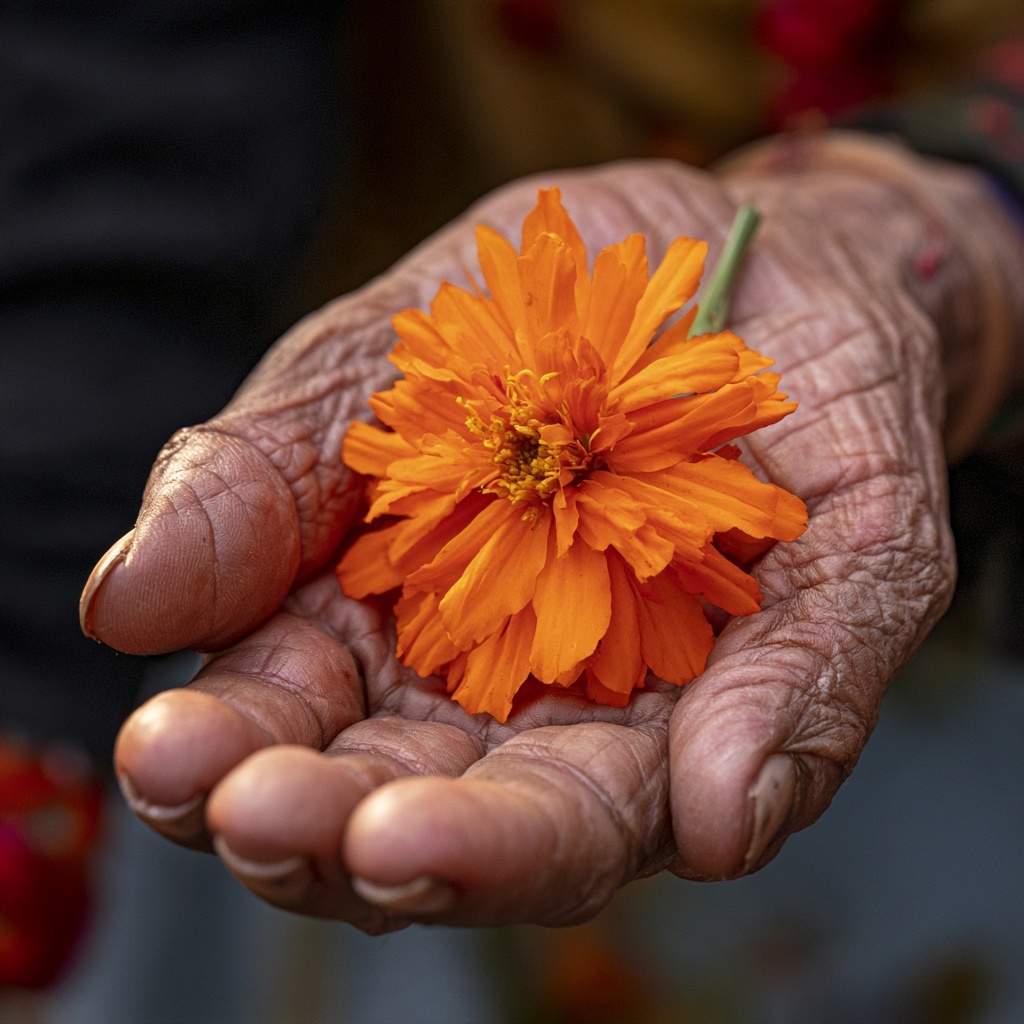
An old, deeply lined hand held open, palm up, with a single orange marigold bloom resting in it, in warm shallow focus against a dark blurred background.
I

The Reserve

Mexico City, the last five days of October. The Barreras sell a year of cempasúchil in a week, all of it, except the forty best stems under the table, which go home for the family’s own dead. Then a man from a hotel sees the blue bundle, and Lucero, who keeps the book, knows exactly what his number would pay for.

Read the story → 9 min
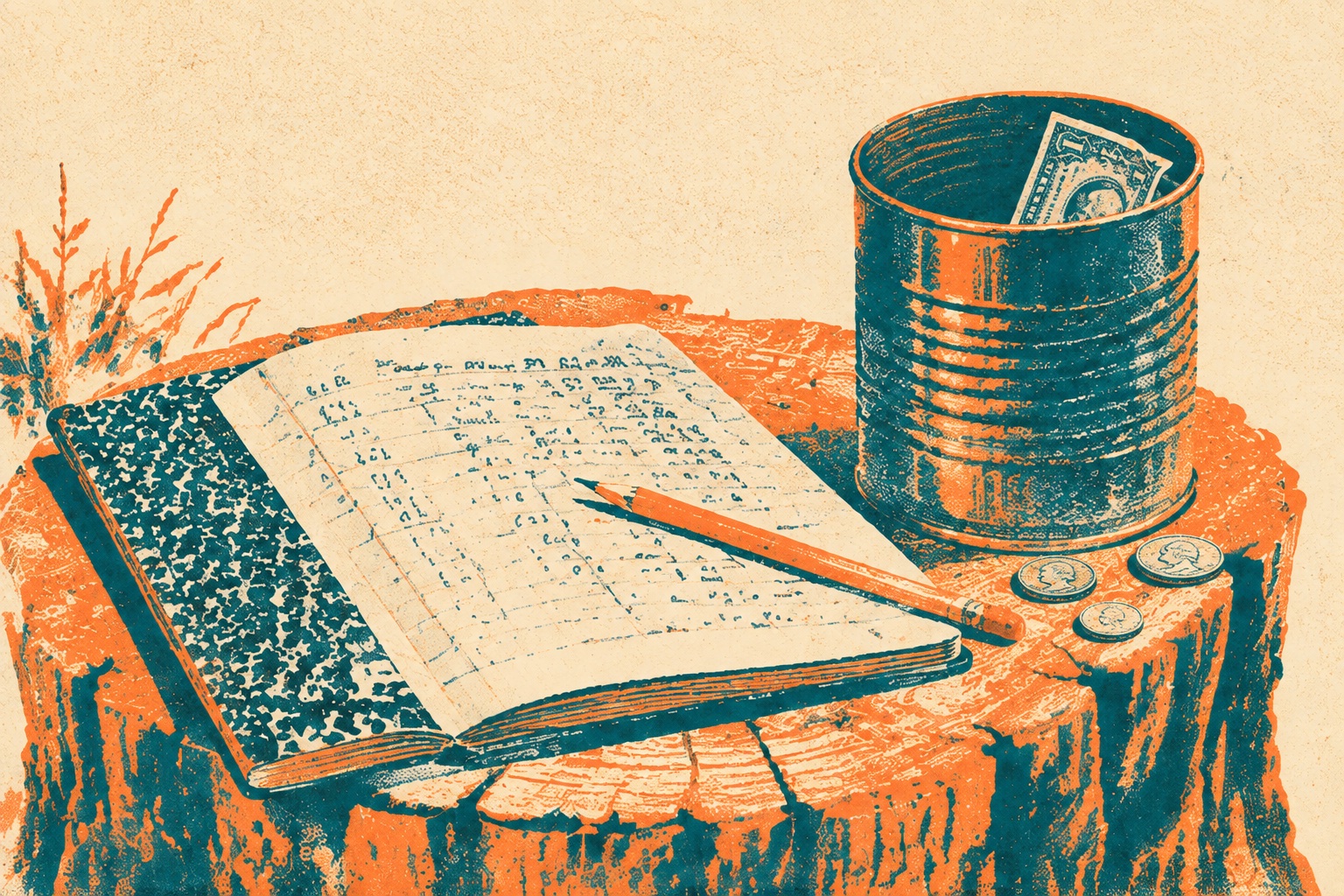
A two-color risograph print in orange and teal on cream paper: a black-and-white marbled composition book lies open on a tree stump, its ruled page filled with handwritten columns of figures and a pencil lying across it; beside it stands a tin can with one dollar bill leaning inside, and three coins lie on the stump at its foot.
II

Make Your Own Change

Half Moon Bay, Pumpkin Festival Saturday, 2019. Lourdes Amaral’s farm stand has run on an honor box for ten years, at a hundred and six percent for eleven months and seventy-one in October. This year she hires a seventeen-year-old to sit beside the box. He is not a cashier and he is not security. Then a man who has paid one dollar a pumpkin since 2010 pulls in against the traffic.

Read the story → 10 min

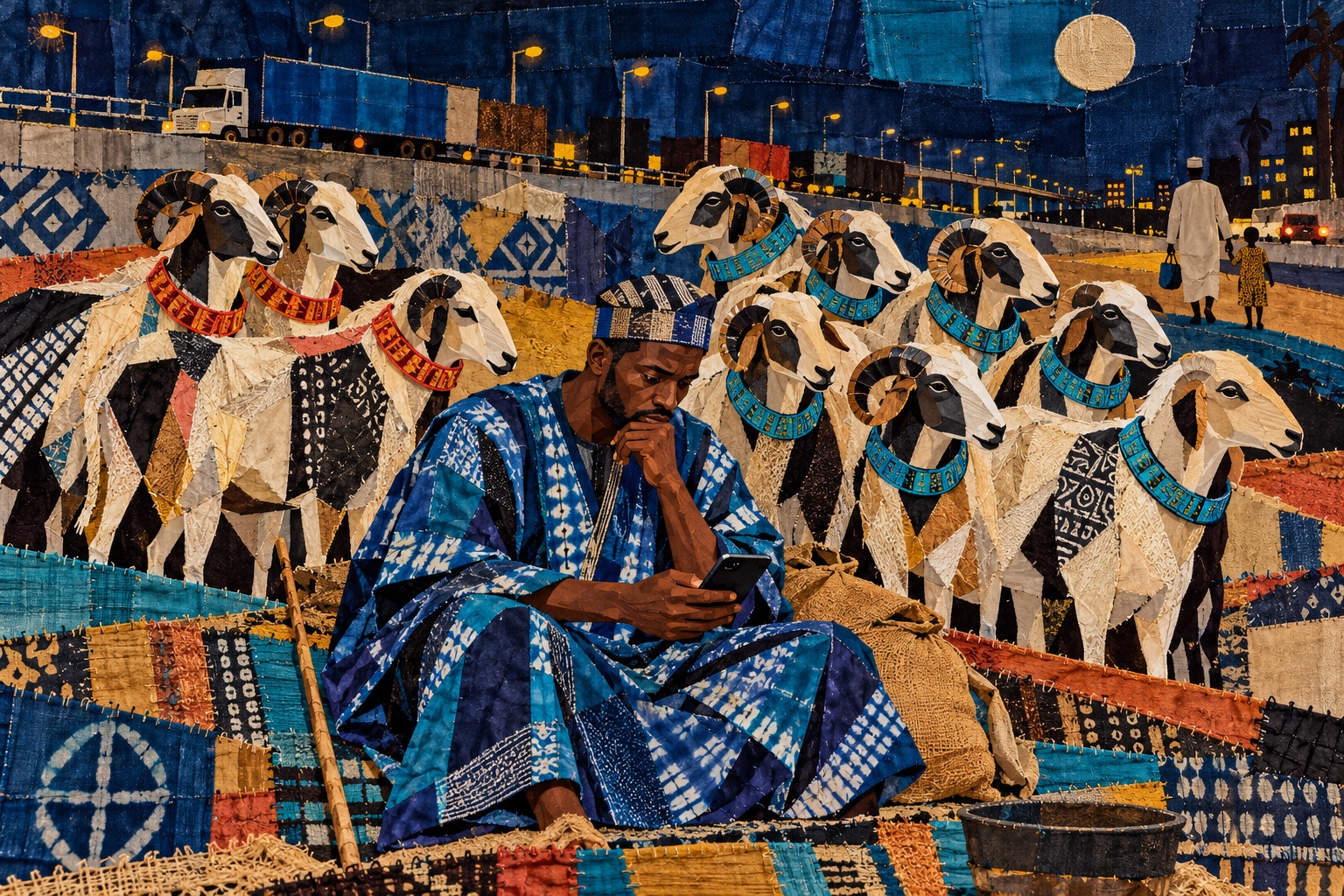
In a patchwork of stitched indigo, ochre and rust cloth, a herder in a blue patterned boubou and cap sits among his rams at night, chin in one hand, looking down at the phone in the other; the white-and-black rams behind him wear beaded collars, red on the left and teal on the right, and beyond them a lorry passes on a lit road under a pale moon while a man and a child walk away along the verge.
III

Collars

Dakar, the last night before Tabaski. Of the sixty sheep Hamady brought down from Kébémer, forty-nine are sold and wearing a cloth collar with a name on it. Eleven are not, seven of them his brother’s, and the verge has agreed on a price. A watchman in a borrowed jacket keeps coming back with the number he has.

Read the story → 9 min