Issue № 8 · Story II
Make Your Own Change
Half Moon Bay, Pumpkin Festival Saturday, 2019. Lourdes Amaral’s farm stand has run on an honor box for ten years, at a hundred and six percent for eleven months and seventy-one in October. This year she hires a seventeen-year-old to sit beside the box. He is not a cashier and he is not security. Then a man who has paid one dollar a pumpkin since 2010 pulls in against the traffic.
Lourdes Amaral hired me in September of 2019 for a job she would not name. I was seventeen. She was my mother’s cousin’s something, which on the coast means she had known me since before I was useful, and she called the house and asked for me and not for my mother, which my mother took as a compliment to herself.
“October only,” Lourdes said. “Saturdays and Sundays. Festival weekend, both days, all day. Fourteen an hour.”
Fourteen was three over what she had to pay, and I said so, because I was seventeen. She said it was because the job was harder than it looked.
“What does it look like?”
“Sitting.”
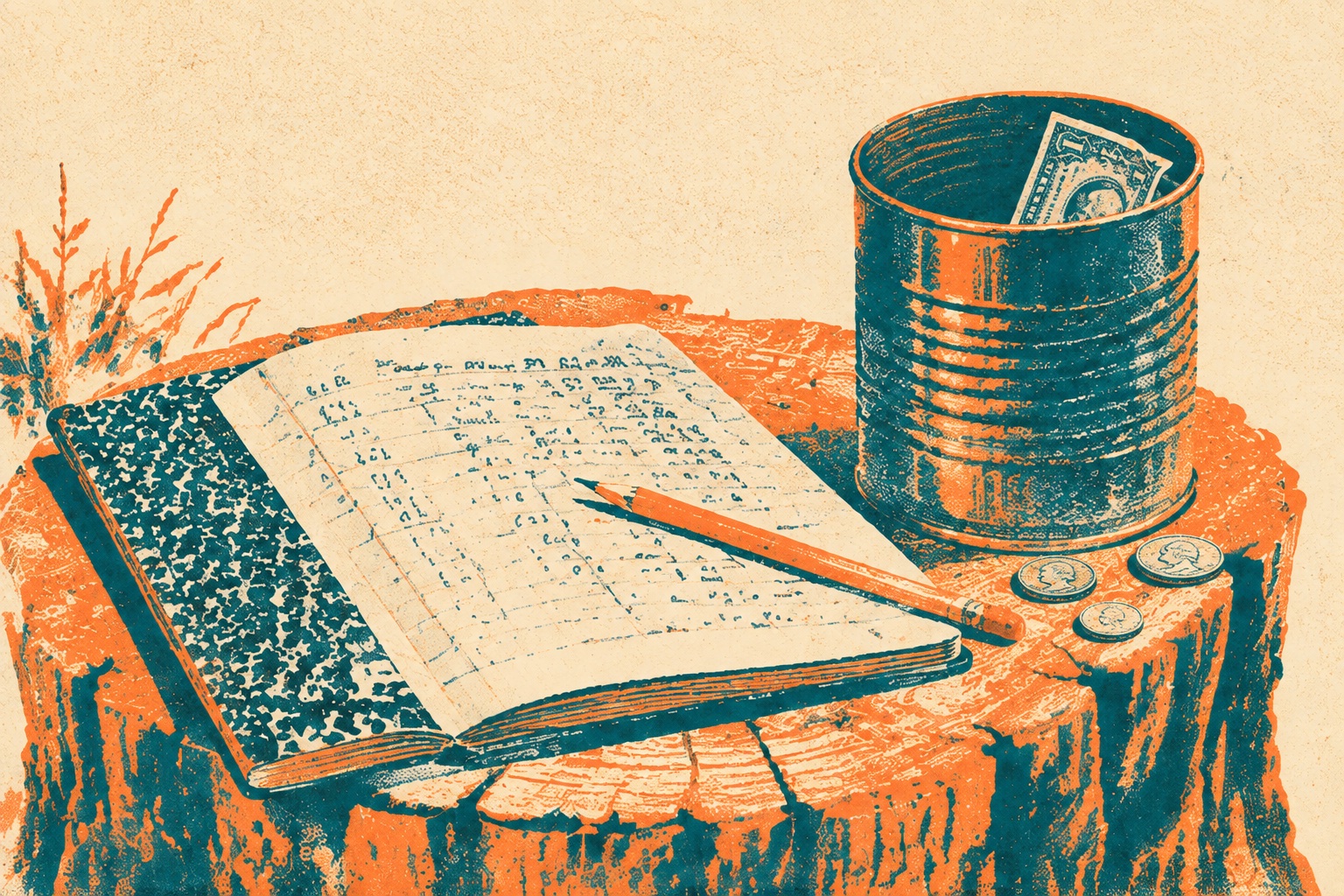
The stand was on 92, on the climb out of town, where the road is two lanes and everybody in the Bay Area wants to be on it for the Pumpkin Festival, the one Saturday every year. A shed roof on four posts. Three tables of pumpkins. Behind the tables, the Brussels sprouts: forty rows of stalks with the little heads packed up and down them, all standing there like something that had been told to wait. On the first post, the sign her father painted, with the three painted over: PUMPKINS $4. SPROUTS $3 THE STALK. HONOR BOX. MAKE YOUR OWN CHANGE. Under the sign, bolted to the post, a green ammo can with a slot in the lid. Beside it, on a stump, a coffee can of ones and quarters.
She walked me through the job in the negative.
“You’re not a cashier. You don’t take money. If you take money, it’s a store, and a store needs a register and a permit and a man from the county with a clipboard, and then I’m a shopkeeper. I’m a farmer with a box.”
“Okay.”
“You’re not security. Somebody takes a pumpkin and drives off, you watch them do it. You don’t run. You don’t call out. You don’t ever say a number. The sign says the number.”
“So what am I?”
She thought about it, which I appreciated, because she had obviously already thought about it.
“Presence.”
She kept a composition book, the black-and-white kind, in the pocket of her vest, and the first Saturday she sat down on the stump next to my stool and opened it on her knee and showed me what ten years of the box looked like.
Every morning she counted what was on the tables. Every night she counted the box and divided. A page a month, a line a day, two numbers and a percent. Her father had done it on the back of seed envelopes and she had done it in a book since 2009, the first October after he died, when the stand came to her. It was the three on the sign until 2014 and the four after.
“November through September, this stand runs at a hundred and six percent,” she said. “Over a hundred. You know why? Because people round up. A stalk is three dollars, they have a five, they don’t want to owe me, they put in the five. Christmas Eve, a twenty in the box with a note that says Merry Christmas Lourdes and no name. A woman from the dentist’s office comes every Thursday and puts in a dollar extra for a week in 2016 when she took sprouts and had nothing on her. I never knew which week. Hundred and six.”
She turned the page to an October.
“Seventy-one,” she said. “Ten years of Octobers, and the worst one was sixty-four and the best was seventy-eight. Strangers round down. Not thieves. Strangers. They have a twenty and the can’s empty and they’re late for the corn maze. They’ve got the kids out of the car and the kids have the pumpkin and they’re not going to put the kids back in the car over a twenty, so they put in a ten, or they put in a five, or they put in what they’ve got, and what they’ve got on average is seventy-one percent.”
“That’s still a lot of pumpkins,” I said.
“It’s all the pumpkins. Three hundred people a Saturday. Seventy-one percent of October is more than a hundred and six of everything else put together, I can add, the pumpkins pay for the sprouts and the sprouts pay for nothing. It’s not the money.”
“What is it?”
She closed the book.
“Seventy-one.”
The festival was the nineteenth and twentieth that year. On the Monday before, at the weigh-off, a man from Napa had brought in a pumpkin that went two thousand one hundred and seventy-five pounds, a state record, at seven dollars a pound in prize money, and it was going to ride in the parade on Saturday.
“A Napa pumpkin,” Lourdes said, the way she would have said a Napa artichoke. “Mine are four dollars, and they fit in the car.”
By eight in the morning on the nineteenth the traffic on 92 was stopped back to the reservoir. Lourdes reported this from her phone, in the voice people use for fog. Then it arrived. Not all at once. More like a tide, where you look up and it’s at your feet.
I learned the job in about ninety minutes. Here is the job. If I looked at the box, people paid. If I looked at the pumpkins, they didn’t. That was the whole of it. Not a stare, nothing a person could object to; just where my face was pointed when they came up the gravel with a pumpkin on their hip and their other hand going to a pocket. If my face was on the ammo can, the hand came out with money. If my face was on the sprouts, the hand came out with a phone to take a picture of the sprouts. I spent the first hour thinking I had imagined it and the second hour testing it, which is the most science I did that year.
The can was empty by ten.
A man held his phone up to the coffee can with the Venmo screen showing, as you’d show a ticket at a gate, and waited a second for the can to do something, and then put the phone back in his pocket and put a five in the box and said “Close enough” to his wife. A man in a fleece asked me for a receipt. I said there wasn’t one. He said he needed one for his records, and I said the sign was the receipt, and he photographed the sign with his pumpkin in the frame and the ammo can in the frame and, I realized afterward, me in the frame, and was satisfied. A woman left a folded note on the stump that said I’m so sorry, I only had a card, with a tomato on top of it that she had clearly bought at the stand down the hill, as a kind of deposit.
A girl about my age, in a sweatshirt from a high school over the hill, stood in front of me with a pumpkin and looked at the box and looked at me and asked, not unkindly, “So what do you actually do?”
“I’m here,” I said.
She looked at the box again, and put four ones in, and said, “Okay,” and I have thought about her since.
Lourdes refilled the can from her own purse at ten and again at a quarter to twelve, forty dollars each time in ones and quarters she’d gotten at the bank on Friday for the purpose, and wrote each refill in the book on the day’s line, in the margin, so it would not count as income.
At noon, about when the parade would have been stepping off down on Main Street with the champion in it, a truck came up from town against the traffic, nearly the only thing on 92 going that direction, and pulled onto the gravel without signaling. It had done this before. A man got out in a county roads cap. Retired, you could tell from the cap; it had the look of a thing that had outlived its job. He did not look at the tables. He walked to the second table and picked up a pumpkin he had clearly chosen from the road, a good one, and carried it to the post with the sign on it, and took a dollar out of his shirt pocket already folded lengthwise, and put it in the slot with the ease of a man posting a letter he’d posted before.
I was on the stool four feet from him. He finished with the dollar, and turned with the pumpkin, and saw me, and I watched him work out that I had been there the whole time.
Dale, I found out later. Ten years. Ten pumpkins. One dollar each, in a slot, in October, when nobody was ever at the box, because nobody had ever needed to be, and Lourdes was forty rows back in the sprouts, where he had never once looked.
He looked at me. I looked at the box. It’s the job.
Behind the tables, in the sprouts, Lourdes had stopped cutting.
She came out of the rows with the knife still in one hand and the composition book in the other, and she came all the way up to the post, past the line, twelve or fifteen strangers deep by then with their pumpkins on their hips, and she said the first price I had ever heard her say out loud.
“Four dollars, Dale.”
He had the pumpkin in both arms. “It was three till last year.”
“It was three till twenty-fourteen,” she said. “And you paid one.”
She opened the book. I don’t know how she found the page. She found the page. I saw it later: one line every October since 2010, and in the margin of it, in with the refills, in pencil, D. $1.
“Two thousand ten, three dollars, you paid one. Eleven, three, one. Twelve, three, one. Thirteen, three, one. Fourteen, the sign goes to four, you paid one. Fifteen, sixteen, seventeen, eighteen, four, four, four, four, one, one, one, one.” She looked up. “Ten pumpkins. You’re twenty-six dollars light, Dale, and that’s with today’s in it.”
The line had gone quiet, the particular quiet of strangers who have realized they are watching locals.
“Your dad let me run a tab,” Dale said.
“My dad’s been dead since the three-dollar sign.”
Dale looked at the pumpkin. He looked at me, which was not fair, and I looked at the box, because that was the job. Then he set the pumpkin down on the gravel, upright, so it wouldn’t roll. I noticed that. He reached into the coffee can on the stump and took out a dollar. One dollar. He held it up for her to see, so she would know it was his and not the stand’s.
“Make your own change,” he said, and read it off the sign, and got in the truck.
He had to wait for a gap to get back onto 92. It took a while. Nobody in the line said anything, and nobody in the line moved, and Lourdes stood at the post with the knife and the book and watched him wait, and when the gap came and he took it she said, to nobody, “Twenty-six,” and went back to the sprouts.
The man at the front of the line had a pumpkin and a twenty. He had watched the whole thing. He stepped up to the post and put the twenty in the slot and then counted sixteen dollars out of the coffee can, slowly, a one at a time, so that everyone could see it was sixteen, and when he had it he folded it into his pocket and looked over the tables at Lourdes in the rows, and said, clearly, “Four dollars.”
She didn’t turn around. She lifted the knife a little, which meant she’d heard.
The woman behind him had exact change, and put it in, and said “Four dollars” anyway. The family behind her had two pumpkins and said “Eight.” A kid said “Four dollars” before his father could, and the father said “He’s got it,” and put in a five and did not make his own change.
It went on like that. I don’t want to make it bigger than it was. Not everyone did it. But enough of them did that by two in the afternoon the coffee can was full for the first time on a festival Saturday in the history of the book. People were putting twenties in the slot and taking their change out loud, in front of the line, and the ones who came up with a fistful of ones paid and dropped the rest in the can for whoever was behind them, and a line that can hear itself pay is a different animal than three hundred strangers each alone with a can.
At three she came up out of the rows with forty dollars in ones for the third refill, and looked in the can, and put the ones back in her purse. She opened the book on the stump to the day’s line. In the margin, where the refills went, under the two forties, where the money went that wasn’t income, she wrote something. I read it upside down. One word, and under it my name, underlined once.
Presence
Then she went back to the sprouts.
We counted at six, at the picnic table behind the shed, with the sprouts going blue in the last light and the traffic finally moving on 92 in both directions. She counted the box and I counted the tables, the pumpkins left, and the gaps where pumpkins had been. I had marked the morning’s count on the plywood in grease pencil, so I could count what was gone.
She divided. She wrote the day on its line.
Eighty-one.
♥ 2026 Pete Kaminski · CC BY 4.0 · a story from Good Day Mockingbird № 8