
Good Day Mockingbird

Issue № 12 The Crier

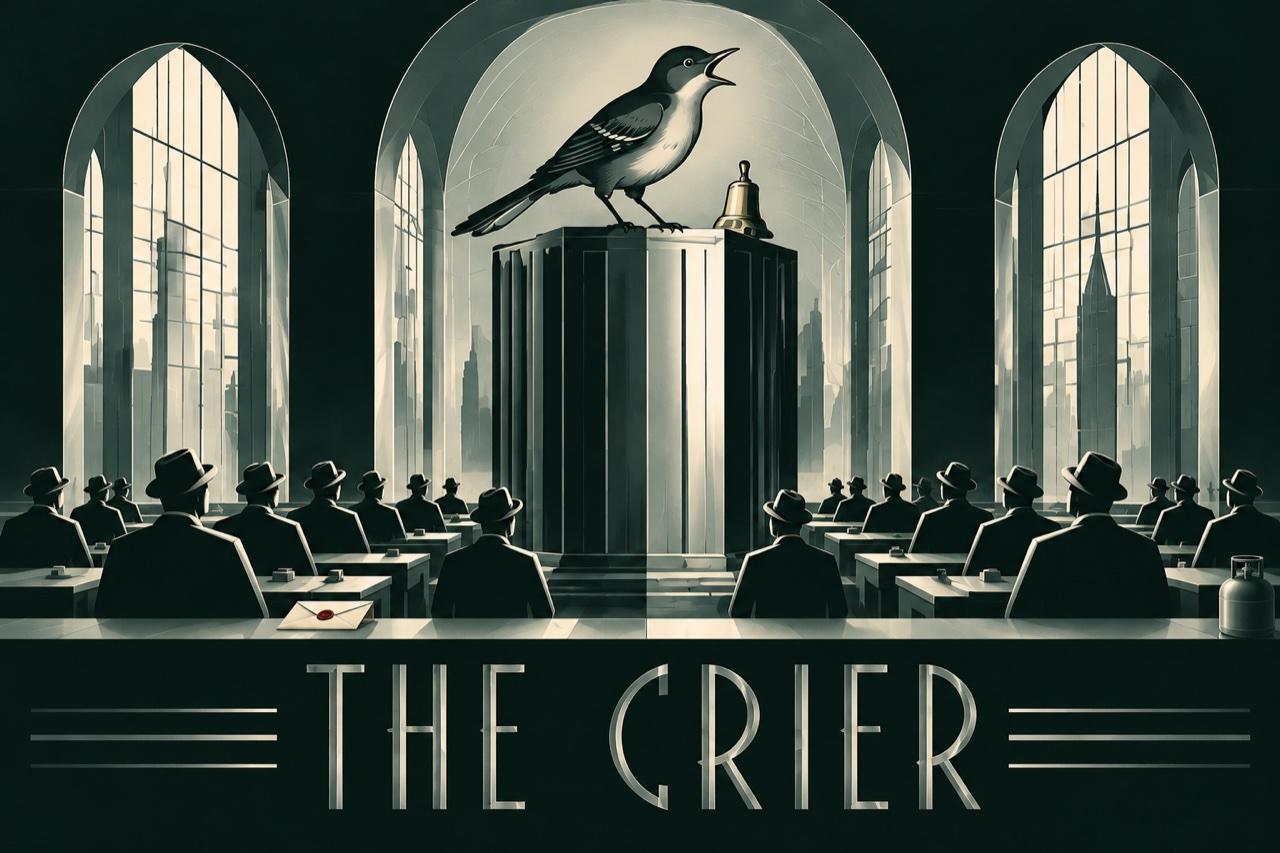
A 1930s Art Deco poster in silver, deep green and black, a grand exchange hall of tall arched windows with a skyline beyond, rows of men in hats at long desks seen from behind in silhouette, all looking up at a high fluted rostrum where a grey mockingbird stands with its beak open beside a small brass bell, a paper with a red wax seal on the nearest desk, a steel gas cylinder at the right, and the words THE CRIER in slim Deco capitals across the bottom.

Three voices that a market listens to. In Venice in 1584, a comandador carries a paper across the city to read from the Gobbo’s steps at the bell, and his widowed sister’s dowry is in the bank it closes. In Iztapalapa in 2014, a woman who once called lotería records the cries for forty trucks, at two hundred pesos each, and is told what the gas truck’s cry has been promising. And at Lloyd’s, under the Lutine Bell, a waiter who hears everything first takes a telephone message that is worth a fortune for as long as it stays in his tray.

From the Editor’s Desk

Some summers ago a mockingbird on a certain block learned the ice cream truck. It had the whole tune, the tinny wobble and the place where the speaker cuts out, and it sang it from the top of a telephone pole at six in the morning, at noon, and at two in the morning under the streetlight. For about a week children ran out into the street with money in their hands and stood looking both ways. By August they had stopped running. So the truck came down the block in the worst heat of the year, playing the same tune it had always played, and it went by a lot of closed doors. The driver got out at the corner and looked up and down, and then he looked at his speaker. He had it checked. There was nothing wrong with it.

Continue reading →

In this issue

A painterly Renaissance market scene, a bearded man in a black velvet cap and a fur-trimmed black coat with a folded paper sealed in red tucked at his chest, placing a coin in the hand of a curly-haired boy in a red cap who holds a paper twist of figs, a banker's chest and scales on a carpeted stone counter in the foreground, and behind them the market stalls, the crowded Grand Canal and a white stone Rialto bridge.
I

Read at the Hour

Venice, the Rialto, one morning in 1584. Zuane Dal Moro has read the Signoria’s papers from the Gobbo’s steps for twenty years, at the bell, in time with a man at San Marco he has never once heard. This morning’s paper says the Pisani bank is suspended from all payment. It is three hours to terce, there is already a line at the bench, the fishwives have stopped taking bank money, and his widowed sister’s dowry is in the book. A comandador who reads early is a traitor. There are always boys who would run to San Polo for a soldo.

Read the story → 9 min

A color photograph at a street market stall under a blue tarp, walls of hanging phone cases in pinks and purples behind, a heavier older woman in a floral apron setting a white bathroom scale down on a pile of phone cases on the counter with both hands, and across from her a stocky woman with her hair pulled back, in a dark apron and lilac blouse, looking down at the scale, neither of them smiling.
II

De Veinte Kilos

Iztapalapa, May 2014. Chayo Montes called lotería for twelve Holy Weeks and now records street cries for two hundred pesos, on a phone, under a towel, behind the curtain of her stall. She is on forty trucks, selling bread and water and avocados down every street in the colonia, and the women come down to her voice in their robes. Then Doña Mati at the griddle next door sets a bathroom scale on top of the phone cases and tells her what the gas truck’s cylinders weigh.

Read the story → 9 min

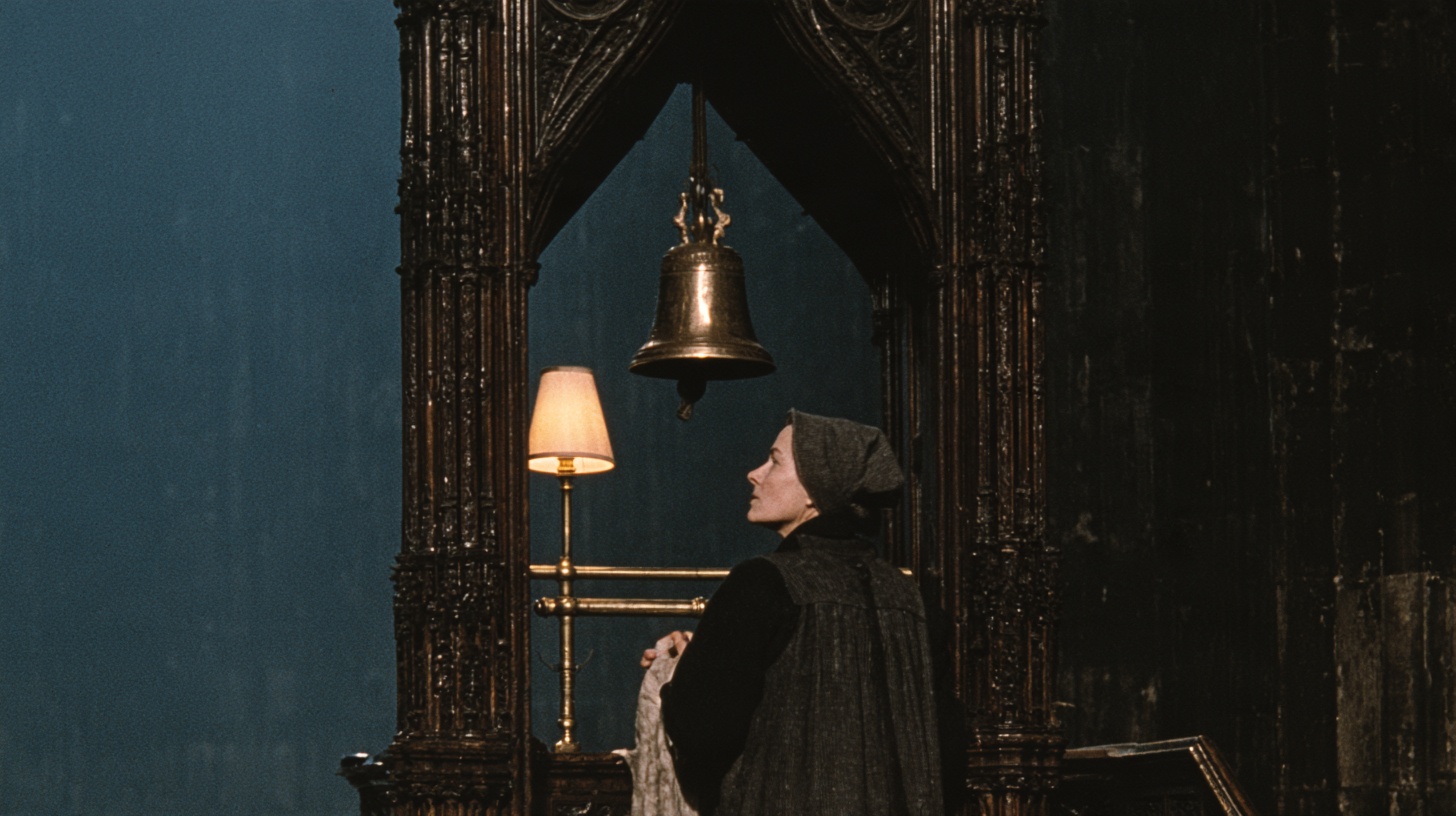
A dark, painterly photograph of the Lutine Bell hanging in a tall carved black Gothic rostrum against a deep teal wall, a lamp with a cream shade glowing beside it, and below the bell a woman in a dark headscarf and shawl, seen from behind and in profile, looking up at it with a polishing cloth in her hands.
III

Twice

The Lutine Bell hangs over the rostrum at Lloyd’s, once for a loss, twice for an overdue ship come home, so that every man in the Room hears at the same instant. Walter Kemp has struck it eleven times in nineteen years, and the rest of the day he calls names and carries messages, and hears everything first. The Kestrel Bay has gone silent in mid-Atlantic and her reinsurance is climbing toward eighty guineas. A cleaner on the staff step asks him the number every evening, because her boy is on that ship. Then a telephone message comes up for the one underwriter who has been buying.

Read the story → 9 min